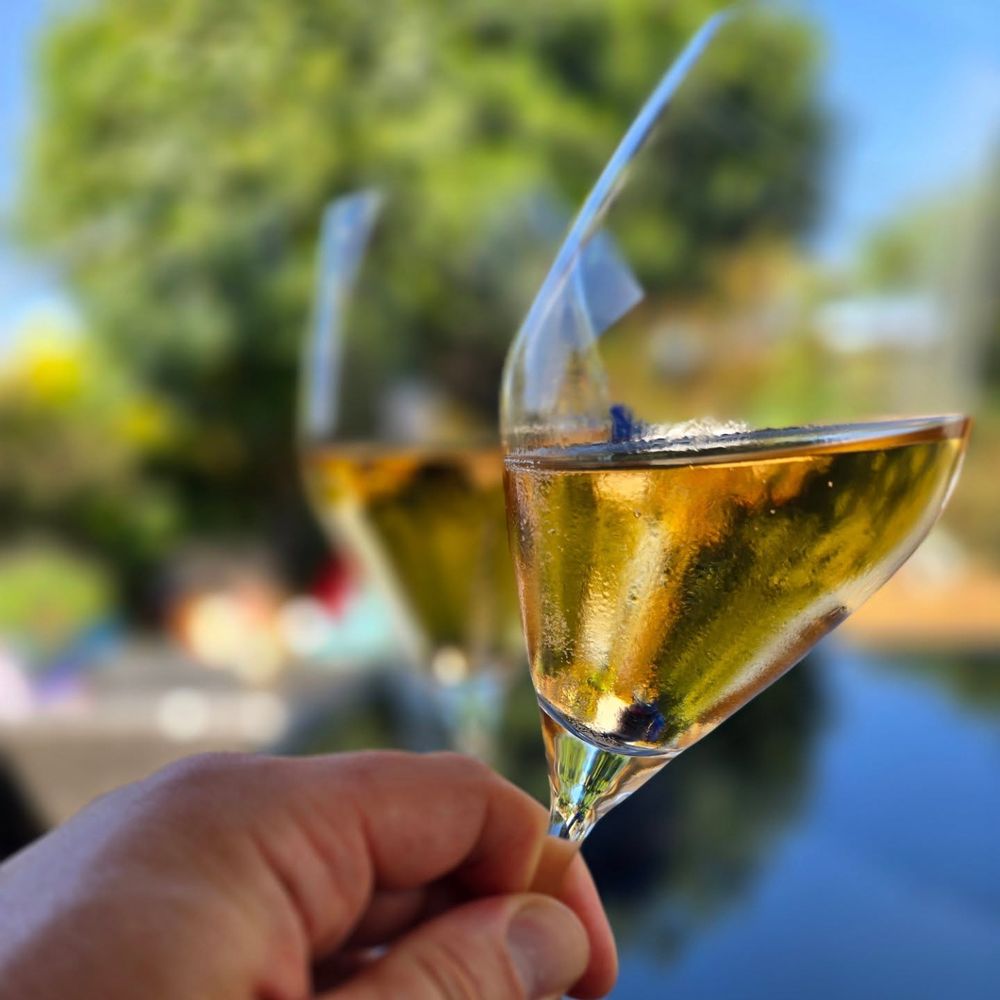
You don't need special words to taste well. Look, smell, sip and notice what lingers. These are the words that will help you say what you like.
Four steps
- Look. Pale lemon with green glints usually means young and fresh. Deeper gold suggests age or a riper year. Fine, steady streams of bubbles usually mean careful winemaking and time on lees.
- Smell. Don't swirl hard, or you'll knock out the bubbles. Get your nose in the glass and take short sniffs. Is it fruit, flowers, bakery or nuts?
- Sip. Let it cover your tongue. Notice the acidity (it makes your mouth water), the sweetness, the body and the bubbles. Are they creamy, or sharp and prickly?
- Finish. Swallow and count. How long does the flavour stay? Is it clean, salty, toasty or bitter?
The flavour families
| Family | Comes from | Words to use |
|---|---|---|
| Fresh fruit | The grapes | Lemon, lime, grapefruit, green apple, pear, peach, gooseberry, strawberry, red apple |
| Floral | The grapes, especially young Chardonnay | White flowers, elderflower, acacia, hedgerow |
| Bakery (autolytic) | Time on lees | Brioche, bread, biscuit, pastry, toast |
| Mature | Bottle age | Honey, hazelnut, almond, dried fruit, mushroom, caramel |
| Oak | Fermenting or ageing in barrels | Vanilla, toast, a rounder texture |
| Mineral and saline | High acidity and a lean style | Chalky, flinty, salty, oyster shell |
What to expect from each style
| Style | On the nose | On the tongue |
|---|---|---|
| Young English Brut NV | Green apple, lemon, a hint of bread | Bright, high acidity, lively bubbles |
| Blanc de Blancs | Citrus, white flowers, chalk | Lean, precise. Toasty with age. |
| Blanc de Noirs | Red apple, red berries | Fuller, rounder, longer |
| Rosé | Strawberry, raspberry, redcurrant | Fruity, sometimes a little grip |
| Long-aged vintage | Brioche, honey, nuts | Creamy, fine mousse, long finish |
| Brut Nature / Extra Brut | Pure citrus and apple | Bone dry and crisp. Great with oysters and crisps. |
How Nick describes it
You'll notice Nick's reviews use everyday language: "a lovely hit of fresh apples", "grapefruit-type sourness", "that first taste where you raise your eyebrows". That's the point. If you can say it, it counts.
Try this: Taste an English Brut next to a Champagne Brut at the same temperature, in the same glasses. Note one fruit word, one bakery word and how long the finish lasts for each.
Sources