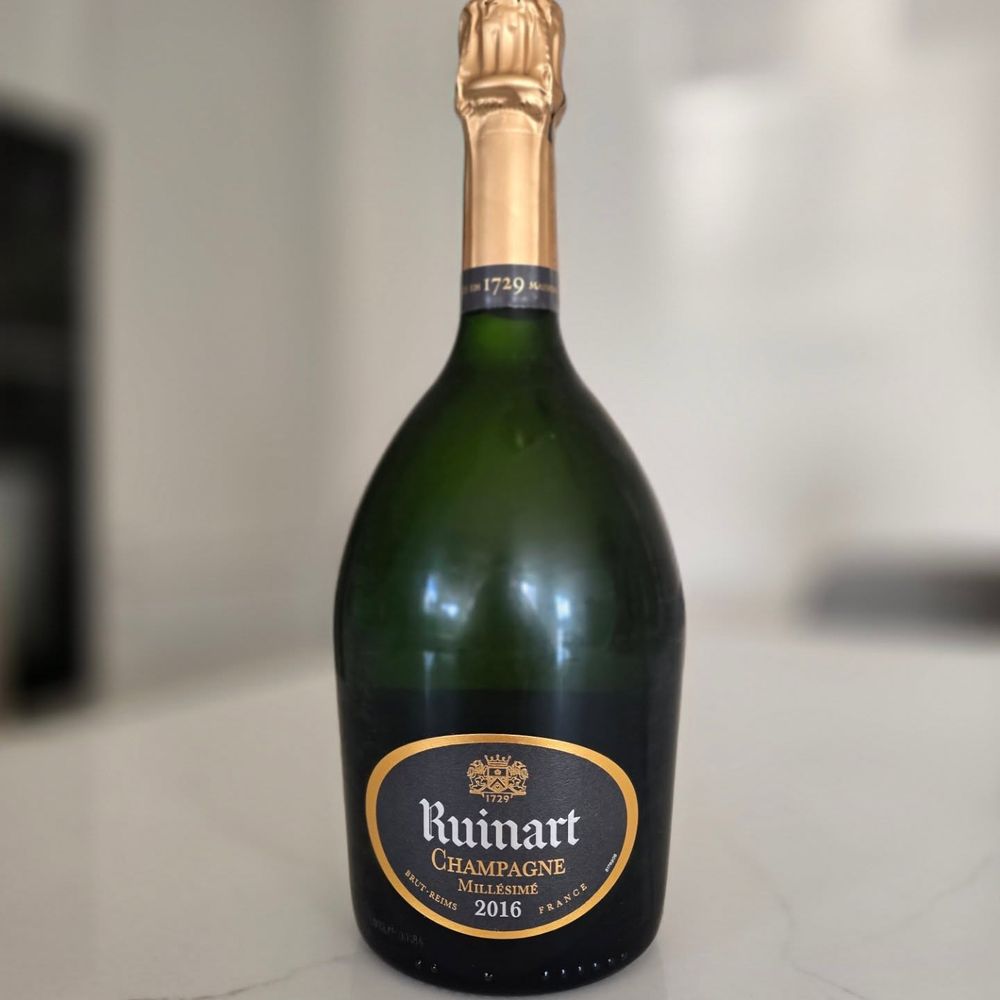
"Grand Cru" sounds like a guarantee of the best. In Champagne it's really a statement about which villages the grapes came from.
Where it came from: the ladder of villages
Most Champagne grapes are grown by farmers and bought by the big houses. To set grape prices, the region created the échelle des crus ("ladder of growths"). It was first set officially in 1911 and gave each village a percentage from 80% to 100%. A 100% village got the full price per kilo, and a 90% village got 90%. The Comité Champagne explains that a 1952 decree reserved "Grand Cru" for 100% villages and "Premier Cru" for villages rated 90% to 99%.
The percentages were abolished in 2010, but the two labels stayed. Today Champagne's rules allow "Grand Cru" for 17 villages in the Marne, and "Premier Cru" for those plus 42 more, according to Vitaceae.
| Area | Grand Cru villages | Known for |
|---|---|---|
| Montagne de Reims | Ambonnay, Beaumont-sur-Vesle, Bouzy, Louvois, Mailly-Champagne, Puisieulx, Sillery, Verzenay, Verzy | Pinot Noir |
| Côte des Blancs | Avize, Chouilly, Cramant, Le Mesnil-sur-Oger, Oger, Oiry | Chardonnay |
| Vallée de la Marne | Aÿ, Tours-sur-Marne | Pinot Noir |
List from Gilbert & Gaillard. Chouilly and Tours-sur-Marne are Grand Cru for one grape and Premier Cru for the other.
What it means for you
- It's a village rating, not a judgement on a particular wine or a particular vineyard plot.
- Grand Cru grapes cost the most, so the wines usually cost more too.
- Lots of brilliant Champagne isn't labelled either way. Big houses often blend Grand Cru grapes with others, and then the label can't say Grand Cru.
- Nick's Veuve Fourny Premier Cru comes from Vertus, a Premier Cru village on the Côte des Blancs.
Is there an English Grand Cru?
No. England has no ranking of villages or vineyards. Our vineyards are young, and there isn't a century of grape-price history to rank them by. The closest signals of quality and origin are:
| English signal | What it guarantees | Rough Champagne equivalent |
|---|---|---|
| English PDO | 100% English grapes from approved varieties, plus lab and tasting checks (GOV.UK) | The Champagne appellation itself |
| Sussex PDO | A regional quality scheme for Sussex (WineGB) | A named sub-region |
| English Regional PGI | At least 85% English grapes, with wider grape choice | No direct equivalent |
| Estate-grown or single vineyard | Grapes from the producer's own land, sometimes one named site | Grower Champagne (RM) or a single-vineyard ("lieu-dit") wine |
| Vintage, plus long time on lees | One year, aged patiently | Vintage Champagne |
The sites English producers rave about are south-facing chalk and greensand slopes, or warm, dry spots like the Crouch Valley. Nobody has written that into law yet. That's part of the fun: you get to discover them now.