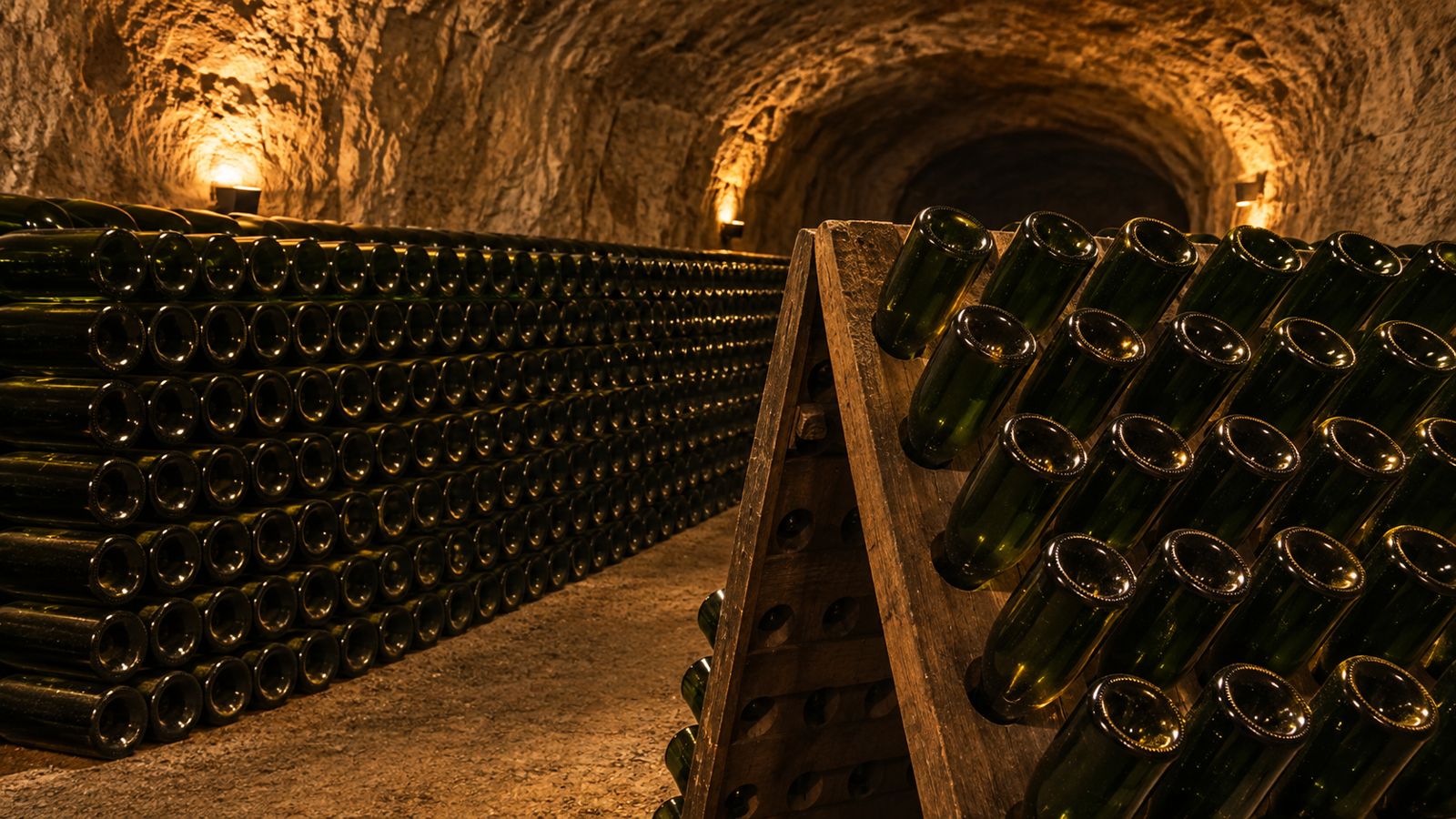
You don't need a cellar. You need somewhere cool, dark and steady. Get that right and every bottle tastes the way the winemaker intended.
The ideal conditions
Storage and serving figures from the Comité Champagne's storage guide and storage fact sheet. Its producers' own cellars sit at around 12°C (maturation on lees).
Upright or on its side?
Either is fine. The Comité Champagne says storing sparkling wine upright or lying down "has no effect on the quality of the wine". The pressure inside keeps the cork moist. Lying bottles down simply saves space.
What light does
Light, especially sunlight and strong shop or fridge LEDs, can react with natural compounds in wine and produce stale, cabbage-like or wet-cardboard smells. Wine people call it "light strike". Clear and pale glass bottles are most at risk, which is why many producers wrap them in cellophane or put them in boxes.
- Keep bottles in their box or in a cupboard.
- Don't store them on a sunny windowsill or under a bright kitchen light.
- Shops that display bottles under bright lights for months aren't doing them any favours. Buy from the back of the shelf.
What heat does
- Warm storage (20°C and above) speeds up ageing. Fresh fruit fades into flat, cooked or nutty flavours far too soon.
- Big swings in temperature make the wine expand and contract, which can push the cork and let air in.
- A hot car for an afternoon can noticeably dull a bottle.
- Freezing can push the cork out or crack the glass.
The fridge
Fine for a few days or weeks before you drink it. For months, a fridge is too cold and dry, and the vibration and light from opening the door don't help. A wine fridge set to around 12°C is ideal for longer.
Serving it well
- Chill to 8–10°C. The quickest way is an ice bucket half filled with water and ice for 20 to 30 minutes (Comité Champagne).
- Open quietly. Hold the cork, turn the bottle and ease it out with a sigh, not a pop. Point it away from people.
- Tilt and pour. Pour down the side of a tilted glass, then top up once the foam settles.
- Don't overfill. A third to half full leaves room for the aromas. See Glassware.
- Leftovers. A sparkling wine stopper keeps it lively in the fridge for a day or two.