English sparkling and Champagne are close relations. The same band of chalk runs beneath both, they use the same grapes and the same method, and the climate is pushing them closer together.
A shared lineage
| Champagne | England | |
|---|---|---|
| Ground | Chalk, with limestone and clay in places | The same chalk resurfaces in Kent, Sussex, Hampshire and the Chilterns. Fairmile describes its soil as "the same flinty chalky marl that stretches across South-East England to the white cliffs of Dover, then under the Channel into Northern France" (Fairmile). There's also clay (Essex) and greensand. |
| Grapes | Chardonnay, Pinot Noir, Meunier | The same three lead the way, plus a few other Pinots under PDO rules |
| Method | Traditional method, by law | Traditional method for the best wines |
| Climate | An average annual temperature of 11°C (Comité Champagne), and warming | Cooler and more maritime. High natural acidity. |
| History | Centuries of houses, growers and rules | A young industry growing fast, with no village classifications yet |
What climate change is doing
In Champagne it's already measurable. The Comité Champagne reports that between 1961 and 2020 temperatures rose by an average of 1.8°C, and that harvest now starts on average 20 days earlier than 30 years ago (Comité Champagne). Earlier budburst also means spring frosts do more damage.
2026 brought this into sharp focus. The Comité Champagne called it "the earliest ever recorded" harvest, with the first vineyards picking from 6 August after historic spring frosts, early flowering and five summer heatwaves (Comité Champagne).
For England, warmer summers have helped grapes ripen more reliably, which is part of why English sparkling has improved so quickly. It isn't all upside. Frost, wet flowering and harvest rain still swing yields. And for Champagne, the challenge is keeping the freshness and acidity that sparkling wine depends on.
Domaine Evremond: Taittinger in Kent
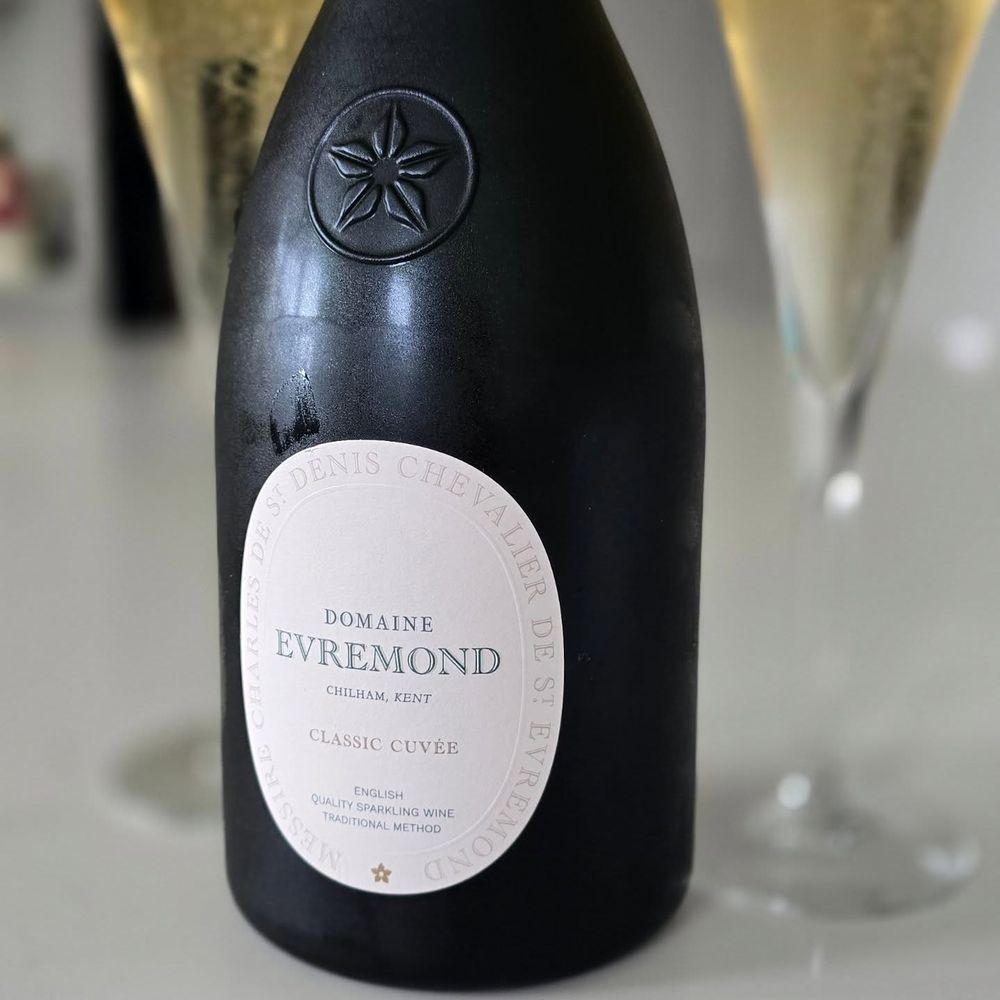
Domaine Evremond is the first time a Champagne house has invested in England to make top-quality sparkling wine. It's a partnership between Champagne Taittinger and its long-time UK partner, Hatch Mansfield (Domaine Evremond).
- 2015: Land bought at Chilham in Kent, a former apple and pear orchard (BBC).
- 2017: First vines planted: Chardonnay, Pinot Noir and Pinot Meunier on deep, free-draining chalk and south-facing slopes (Decanter).
- 2019: First full harvest (Domaine Evremond).
- 2022: Ground broken for the winery and cellar door.
- September 2024: The gravity-fed winery and chalk cellar, with space for up to 1.5 million bottles, opened by the Duchess of Edinburgh (Decanter).
- Spring 2025: Classic Cuvée Edition I released and the cellar door opens. The blend is 55% Pinot Noir, 35% Chardonnay and 10% Pinot Meunier, with 80% wine from 2020 and 20% reserve from 2019 (Retail Times). It spent over three years on lees, and 100,000 bottles were made (Lay & Wheeler).
Why Kent? The criteria were chalk soil, south or south-west facing slopes and natural shelter, much like the best of Champagne. Taittinger's team has said it had to learn a new terroir from scratch: a maritime climate, flint-rich chalk, and Kent's long sunshine hours (Retail Times).
Visit Domaine Evremond Read Nick's review
Taste the connection
Open Taittinger Brut Millésimé 2015 beside Domaine Evremond Edition I. Same family, same thinking, different ground and weather. It's one of the best tastings you can do at home.